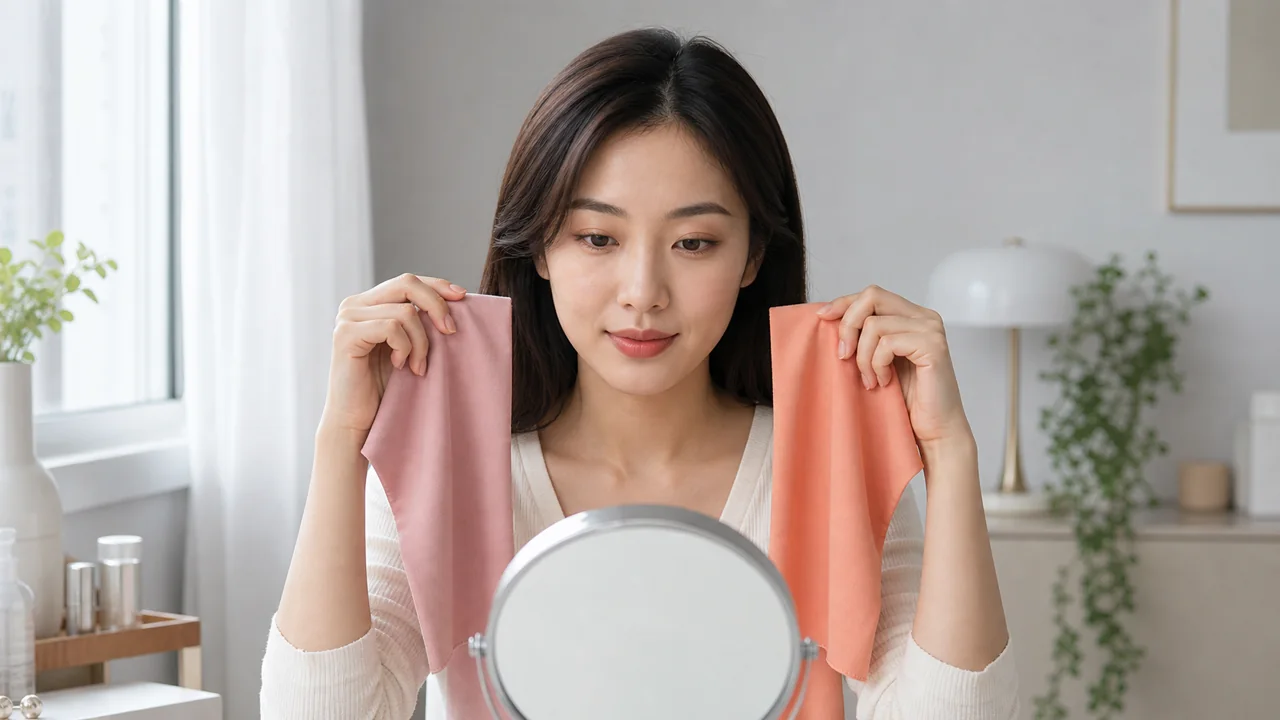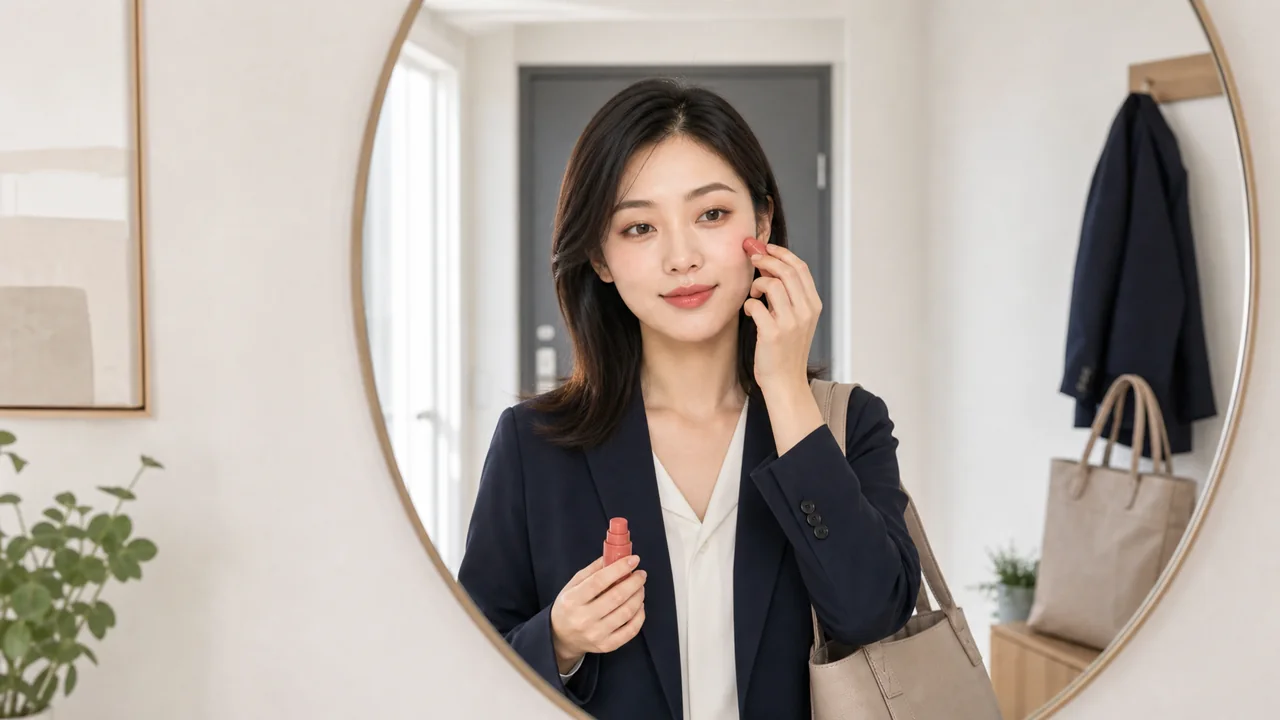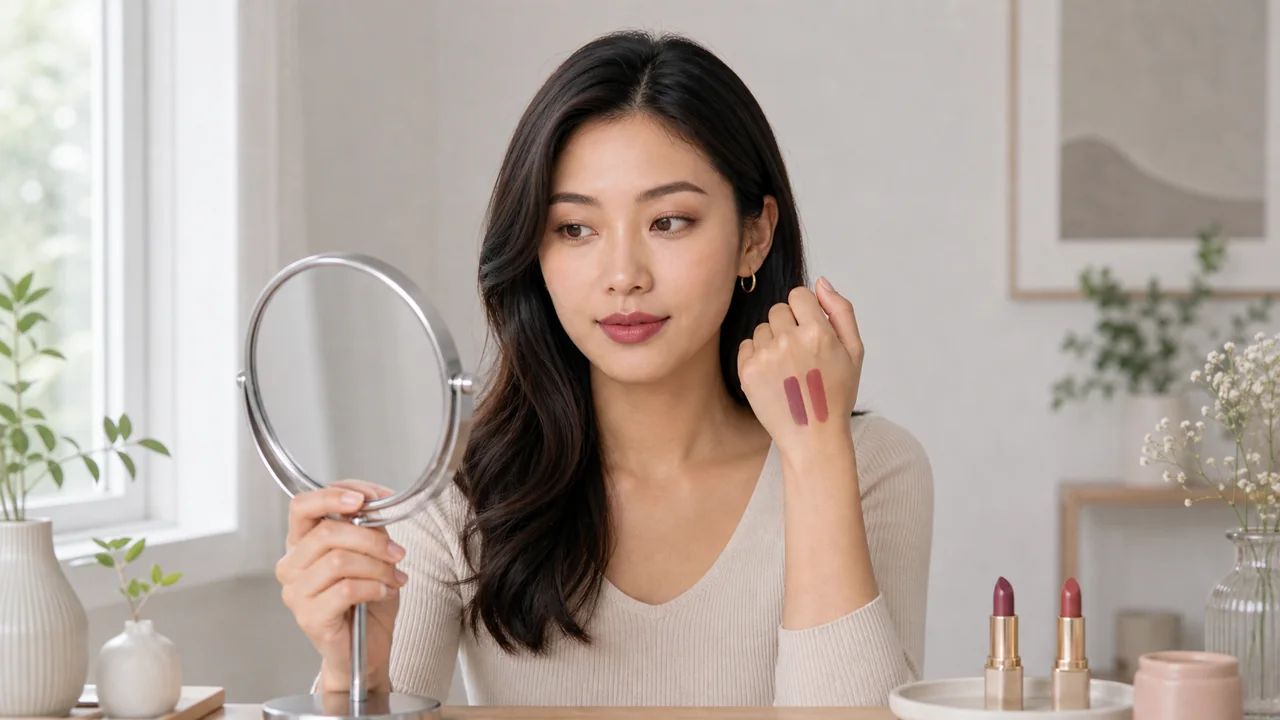
A lipstick can look elegant in one light and harsh in another. The goal is not to find a universally perfect color, but to understand when each color works.
Control the light
Compare colors in the same place, preferably near natural indirect light. Avoid judging one color in warm bathroom light and another near a window.
Separate tone from depth
If a color feels wrong, ask whether it is too warm, too cool, too bright, or too deep. These are different problems with different fixes.
Test two coverage levels
Some colors work as a stain but not as a full lip. Others need full coverage to look intentional. Record both before rejecting the shade.
Look at the whole face
A lip color that looks good on the hand may overpower the face. Check whether attention still returns to your eyes and overall expression.
Use photos as notes
Take consistent photos and label the shade, layer, and light. A small library of comparisons is more reliable than memory.
Build color families
Instead of searching for one perfect lipstick, keep a rose family, a warm family, and a deeper option for different settings.
Record why a color works
A useful lipstick note says more than "pretty." Write whether it brightens the face, makes teeth look warmer or cooler, competes with eye makeup, or needs a liner to look intentional.
Use a half-lip comparison only briefly
Half-lip tests are useful for direct contrast, but whole-face photos are better for deciding whether a color belongs in a complete look. Use both rather than relying on one mirror impression.
- Test thin layer, full coverage, and blurred edge separately.
- Compare with the same cheek color each time.
- Save one daylight and one indoor photo for future purchases.
For broader color direction, pair this with the undertone comparison guide. For quick daily use, connect the winning shade to a five-minute commute routine.