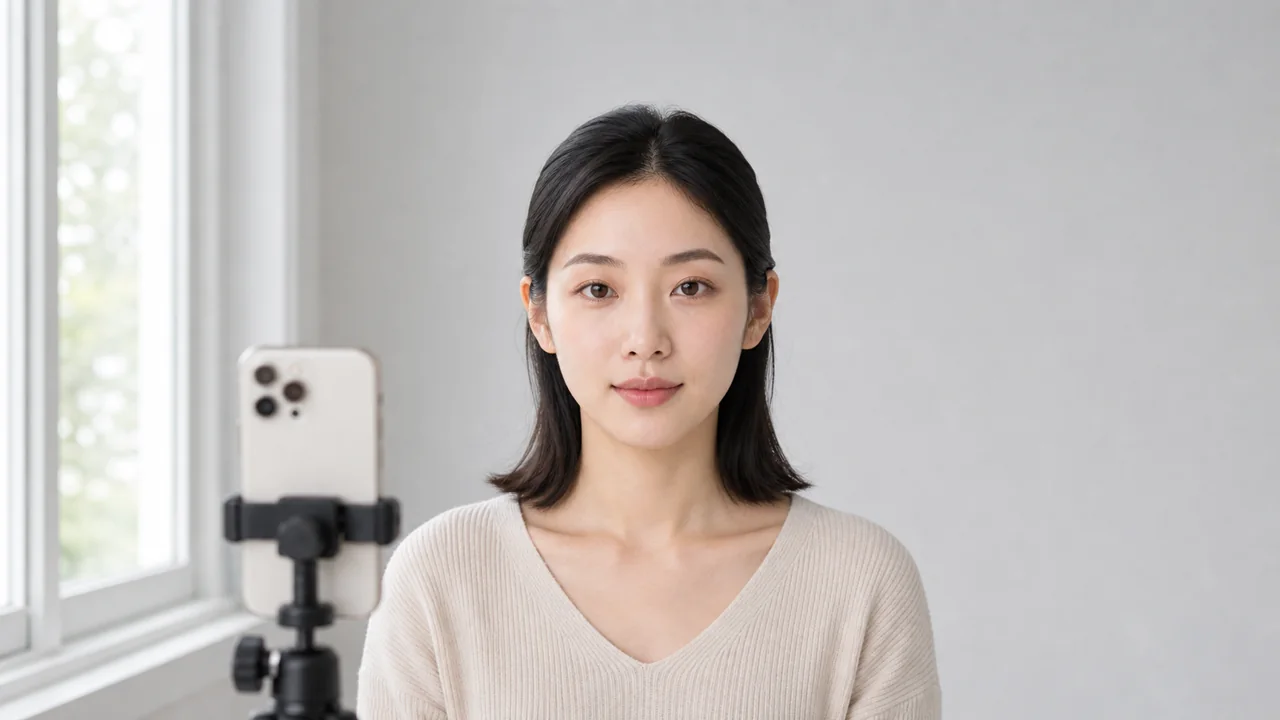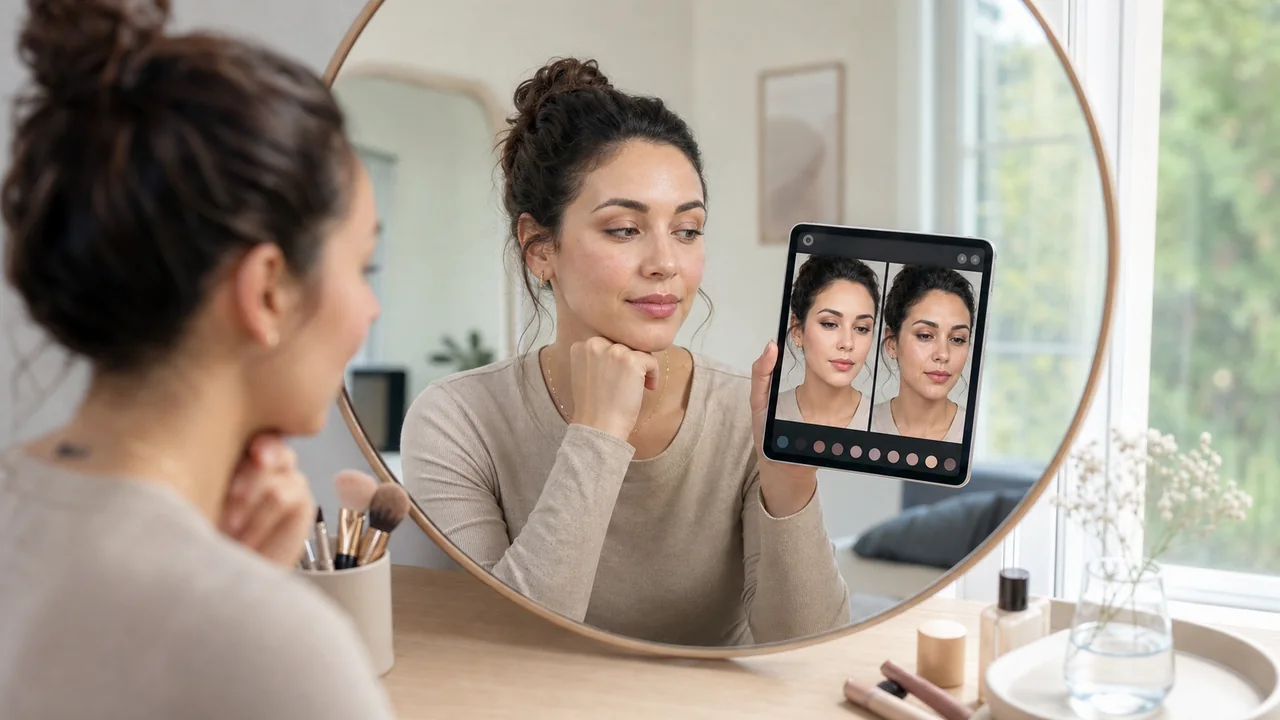
Beauty filters usually optimize for instant enhancement. AI try-on is more useful for exploring how a different makeup direction might feel. Both process images, and both can introduce errors.
Different goals: enhancement and direction preview
Common filters apply consistent smoothing or shape adjustments. Generative try-on creates a new reference image from the input photo and selected look, helping compare color, finish, and mood.
Why results can look natural and still be wrong
Clear, evenly lit, unobstructed photos make it easier to preserve identity. A generative model may still change local details, texture, or accessories, especially with side angles, glare, and low resolution.
Check four things
- Do the eye shape, lip shape, and proportions still look like you?
- Do highlights and shadows match the original light?
- Can the color and finish be recreated with real products?
- Does the main direction remain stable across a similar photo?
A better workflow
Compare one major variable at a time, such as lip temperature, base finish, or eye placement. This makes the preview more actionable.
Use a reliability score before trusting a result
Give each generated image a simple score from 0 to 2 across four checks: identity, light, makeup placement, and real-world repeatability. A beautiful image that scores low on identity should be treated as inspiration only, not as a decision guide.
Choose the right tool for the decision
Use AI try-on for full-look direction, simple overlays for one lipstick or blush question, and real product testing for texture, wear, and exact shade matching. The tool should match the risk of the decision.
- For buying a product, validate with swatches or existing products first.
- For event planning, compare several complete looks from the same baseline photo.
- For diagnosis-style guidance, keep the result separate from medical or skin-care claims.
When two outputs disagree, keep the one that preserves your facial structure and discard the one that only looks more polished. A reliable preview is less exciting than a fantasy image, but it is far more useful for deciding what to try next.
Start with a controlled input from How to take a better photo for AI makeup try-on, then compare full-look options in free try-on. That sequence reduces random variation and makes the output easier to act on.