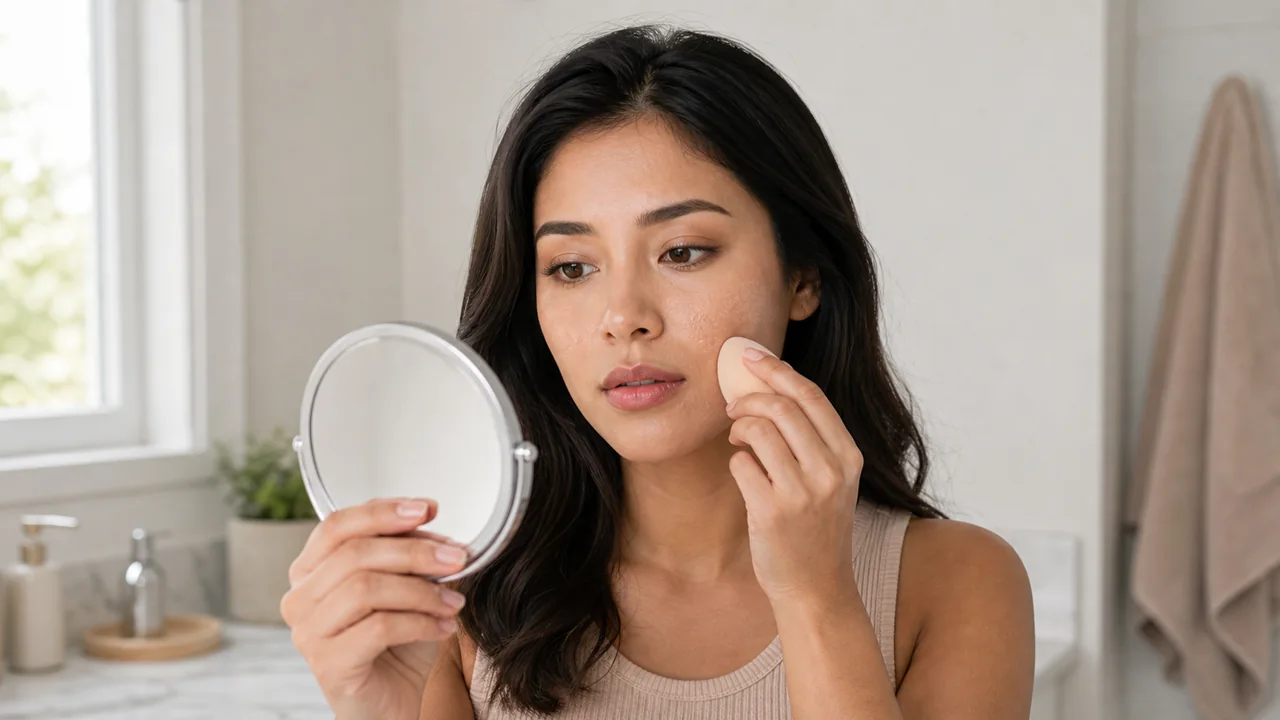
When foundation looks heavy, cracked, or powdery, the cause is rarely just the shade. Texture, skin prep, application amount, and lighting all interact. A structured check saves more time than replacing products at random.
Start with where the problem appears
If makeup cakes around the nose and smile lines, excess product and movement may be the main issue. If it flakes on the cheeks, the skin surface may need gentler prep. If it looks fine in the mirror but heavy on camera, powder and flash behavior may be involved.
Check skin prep before foundation
Base makeup needs a surface that is hydrated but not slippery. Let skincare settle for a few minutes, then remove visible excess before applying foundation. If sunscreen pills, no foundation will sit evenly on top.
Use less product than you think
Apply a thin layer only where coverage is needed, then add spot concealer. Full-face coverage can make texture look stronger because product gathers on every small surface change.
Match finish to your real setting
Matte products can help oil control, but they may exaggerate dry patches. Dewy products can look fresh in natural light but may separate under heat. Your best finish depends on the setting, not just your skin type label.
Do a half-face test
Try one change at a time: less moisturizer, less foundation, a different tool, or powder only in the center. Photograph both sides in the light where you actually need the makeup to work.
A better decision rule
Keep the routine that looks stable after two hours and still reads like skin up close. A base that only looks perfect for five minutes is not a reliable daily solution.
Diagnose the failure pattern
Do not change primer, foundation, powder, and tool at the same time. First identify the failure pattern, then change the smallest upstream step that could fix it.
Use a three-day base audit
Day one: use your current routine but half the foundation amount. Day two: keep the amount and change only the tool. Day three: keep the better application method and adjust powder placement. This isolates the real lever.
- Photograph the base immediately and after two hours.
- Record where texture appears, not just whether it looks good or bad.
- Keep the version that fails least in your real lighting.
If the issue appears mainly on camera, compare it with Makeup for camera vs real life. If you need a cleaner input for generated previews, use the AI makeup photo guide.